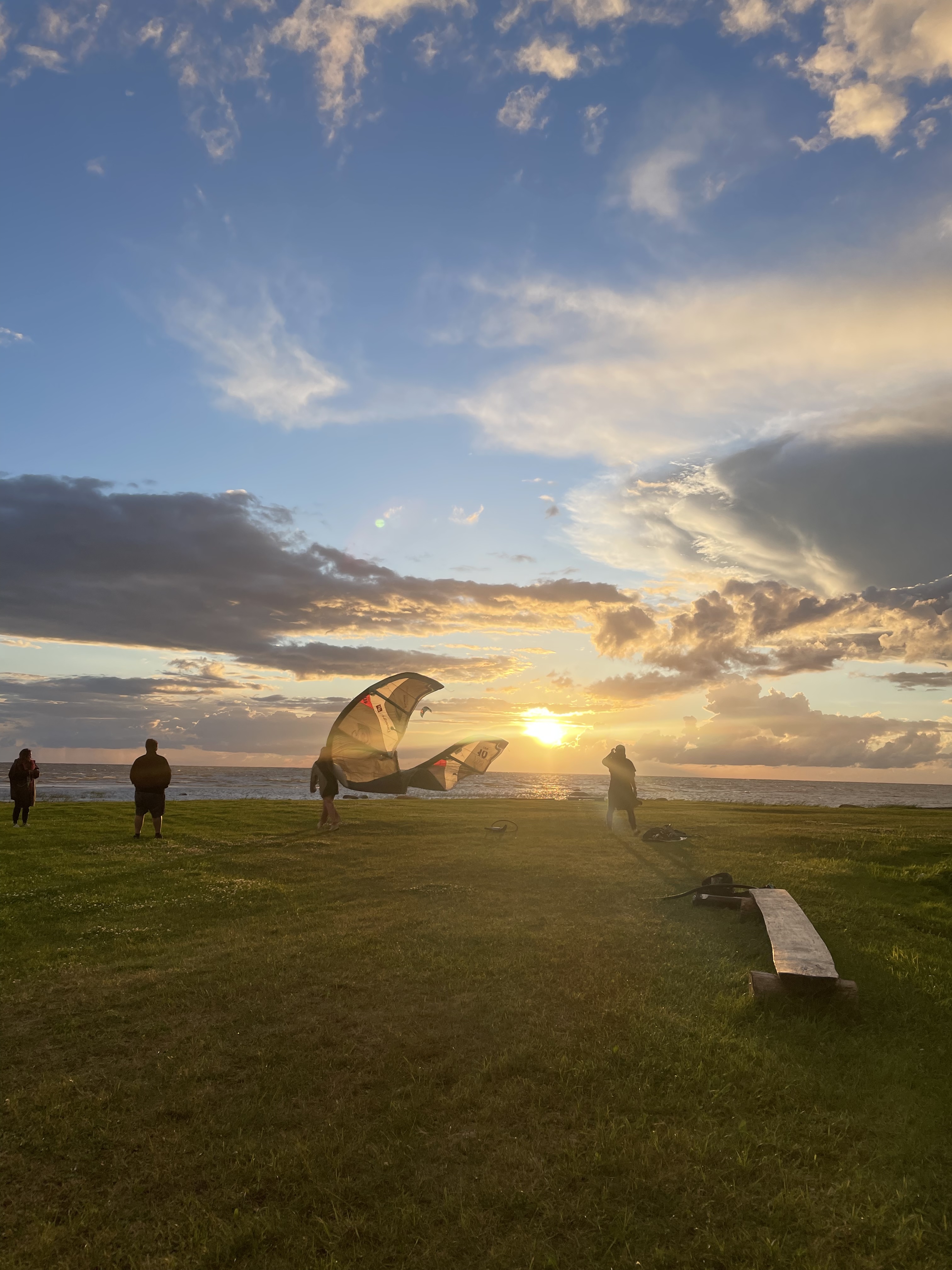
Summer is the social season: warm enough to linger, light late into the evening, and friendly for lessons when the wind shows up. The catch is that the best wind is often not in July. Estonian weather sources describe autumn and winter as the windiest part of the year, while spring and summer are usually lighter. Around Tallinn, climate notes point to a spring-summer tendency around west-to-west-northwest, and autumn-winter more southwest. In plain beach language: summer is gorgeous, autumn is greedier, winter is for the brave and well-dressed.
Winter is not empty, either. Some riders still go on the water in proper cold gear, but Estonia also turns into snow-kiting country when fields, ice and snow line up. That is a different discipline from a barefoot August sunset at Stroomi, and it deserves respect.
Why Estonia is secretly excellent for direction chasing
The gift is shape. Estonia has the Gulf of Finland on the north coast, the Gulf of Riga down southwest, Lake Peipsi inland, and the western islands sitting out in cleaner, stronger air. Visit Saaremaa makes the island point nicely: on Saaremaa you can often drive to a beach that likes the day's wind direction instead of trying to force the wrong beach to behave.
That matters because the safest beginner-to-intermediate kite wind is side-shore or side-onshore. Offshore and cross-offshore winds can turn a small mistake into a long, cold problem. LoheSurf's safety notes say the same thing in less romantic terms: pick the beach for the wind, not the other way around.
Tallinn and Harjumaa by wind direction
North
Pirita checks, Stroomi, Kakumäe Haven, Klooga, Neeme and Laulasmaa north side
Open Gulf of Finland air can be clean, colder and a bit punchy. In summer, beach traffic and swimmer zones matter as much as the forecast.
North-east
Kakumäe Haven, Kaberneeme, Neeme, Muuga-side checks, Lohusalu and sheltered bay options
NE is less automatic than west wind, but the north coast has enough corners that it can become a very good puzzle instead of a write-off.
East
Vergi, Katariina, Kakumäe Haven, Lohusalu, Kaberneeme and some Ihasalu/Neeme alternatives
East wind is spot-specific around Tallinn. It is exactly the kind of direction where guessing from a map can humble you quickly.
South-east
Katariina, Haapse, Pakri surf checks, Laulasmaa variants and selected protected bays
SE can be lovely when the launch angle is right, but it is not a direction to force at a random beach.
South
Püünsi, Ihasalu, Kaberneeme, Laulasmaa, Koipsi, Pärnu if you are happy to drive
Direct south around Tallinn can be awkward unless the beach shape gives you side-on wind. Look for bays that turn the angle in your favor.
South-west
Püünsi, Ihasalu, Kaberneeme, Laulasmaa, Vääna, Laoküla, Pärnu and island west-coast spots
SW is one of Estonia's big moods, especially outside high summer. It is worth learning a few alternatives because the popular beaches can fill fast.
West
Kakumäe, Stroomi, Laoküla, Vääna, Pakri, Paldiski-side checks and Pärnu
This is the classic Estonia hunt. West wind is common enough that your personal spot list should start here.
North-west
Kakumäe, Stroomi, Klooga, Paldiski, Pakri, Laoküla and Suur-Pakri-style wave checks
NW can bring proper Baltic texture. Great when you want energy in the water, less cute if you hoped for a sleepy flat-water lesson.
Treat this as a planning shortlist, not a launch permission slip. Exact beach position, swimming zones, rocks, rescue access and temporary local rules still decide the session.
A few places worth keeping in your phone
Tallinn
Kakumäe
Works: W, NW
A city spot with room to rig and a proper local following. It is often the first place people think about when the west wind wakes up.
Tallinn
Stroomi
Works: N, W, NW
Beginner-friendly reputation, grass for rigging, and easy parking. Summer crowds matter here, so be polite and boring around launch. Boring is underrated.
Harjumaa
Laulasmaa
Works: Many directions, often checked on N/S edges
About 45 minutes from Tallinn Airport, with flat, chop and small-wave moods depending on the day. A useful west-of-Tallinn option.
Harjumaa / toward Lahemaa
Kaberneeme
Works: N, NE, SW, W variants depending on exact launch
One of those northern-coast places where the bay shape matters. Great to keep in the shortlist when Tallinn itself looks wrong.
Southwest Estonia
Pärnu
Works: W, SW, S
A summer beach town with space, shallow water in places, and enough non-kiting life around it that a half-wind day is not tragic.
The islands
Saaremaa and Hiiumaa
Works: Almost always something, if you are willing to drive
This is Estonia doing its best kite-trip impression: long coastline, open wind, fewer people, and enough corners to chase direction.
The nice version of the plan
If you are visiting Estonia in summer, start around Tallinn because it is easy: Pirita, Stroomi, Kakumäe, Katariina and the Harjumaa beaches give you a lot of learning fast. If the forecast gets serious, drive west or north-east. If you have a few days, go to Saaremaa or Hiiumaa and let the island choose the beach. Pidula, Sõrve, Mändjala, Ristna and Külaküla all show up again and again in Estonian surf maps and local-school material for a reason.
The best Estonia kite day is not always the most famous spot. Sometimes it is the one with eight people, clean side-on wind, enough room to rig, and no drama in the launch. That is exactly the kind of day Lohera is being built to find.
Browse Estonia kite regions